How to eliminate 160 hours of audit prep per cycle?
Before every tier-1 analyst evaluation, the team went through 315 questions manually. Cross-referencing documentation. Formatting answers. Checking completeness. Rewriting for clarity. One question at a time. One hundred and sixty hours per audit cycle. A bad audit result cost sales, so the overhead had to disappear.
Audit prep eliminated every cycle
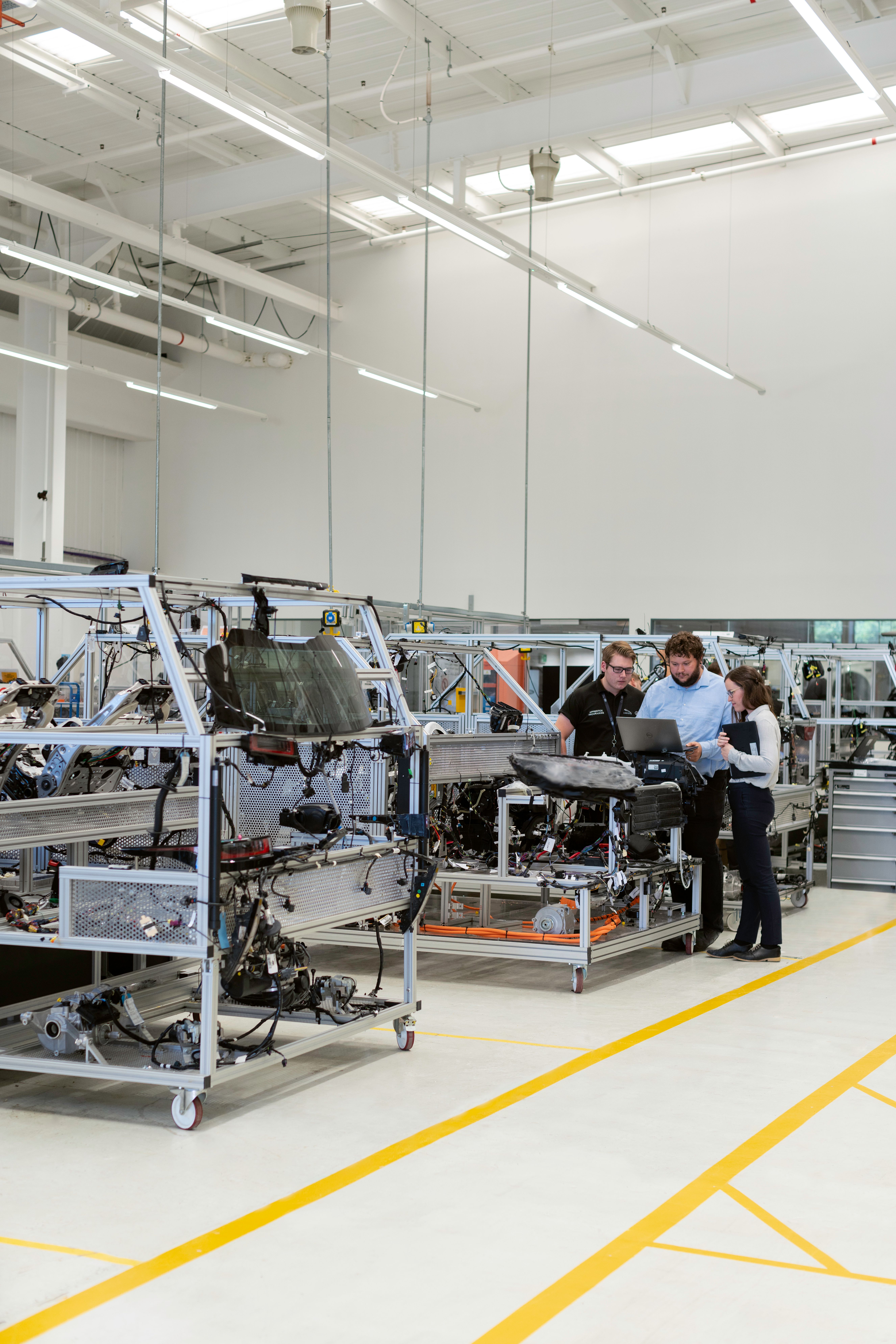
Industrial SaaS, evaluated every cycle.
SKC's customers are industrial B2B SaaS platforms. Every audit cycle, a tier-1 analyst decides whether their category leadership holds. The pipeline turns that overhead into a first draft the team reviews instead of writes.
Bureaucratic work, but with the sales pipeline attached to it.
Audit questionnaires from tier-1 analysts look like admin. In practice they gate deals. Fail to answer a section well and the analyst rating drops, and that shows up months later as sales that didn't close. The team knew this, so nobody skipped the work. They just absorbed the hours.
We ran a root cause on why 315 questions took 160 hours. Four things came up:
1. Documentation was scattered across three source systems with no unified retrieval path.
2. Each answer required context from multiple documents that didn't reference each other.
3. There was no standard format. Every question got reinterpreted and reformatted from scratch.
4. Answer quality varied depending on who wrote it and when.
Every one of the four was an infrastructure problem. So we built infrastructure.
A four-stage pipeline that ends with the team reviewing, not writing.
Each stage owns one of the four root-cause failures. Retrieval. Cross-referencing. Format. Voice. Together they take the 315-question document from empty to a full first draft, and hand it to the team for finalisation.
Extraction layer
A unified retrieval surface across the three source systems. Every question has a single place to fetch its evidence from, regardless of which system that evidence lives in.
Completeness check
Before any drafting starts, the pipeline verifies that the evidence needed to answer each question is actually available. Missing evidence is surfaced up front, not discovered mid-answer.
Voice-consistent generator
A draft answer is composed for every question in the company's own tone and terminology. The reviewer edits from an on-brand starting point, not from a bland template.
Review & finalise
The team reviews and finalises the 315 pre-drafted answers. Human judgement stays. The mechanics leave.
Retrieval-first. Gate before generation.
Answers reached the reviewer in Slack. Feedback lived there too.
Every draft answer was pushed to the responsible reviewer through their existing chat tool. Slack for one team, Teams for another. Reading the draft happened where the reviewer already worked, not in a new app they had to remember to open.
Approvals were a reaction or a short reply. Rejections were normal in-thread comments describing what to change. Each rejection reply was captured and fed back into a new generation for that specific question. No ticket, no separate review UI.
The system learned from every rejection. Feedback got compiled into the generation prompts and reference examples. Over a few cycles, the rate of rejections dropped, and the drafts got closer to what the reviewer would have written themselves.
Same 315 questions. Same voice. Same week.
Before, per question, ×315
- Interpret the question.
- Search three source systems for evidence.
- Cross-reference the documents by hand.
- Reformat the answer from scratch.
- Rewrite for voice consistency.
- Validate before moving to the next one.
After, per cycle
- The pipeline drafts all 315 answers.
- The completeness check surfaces gaps up front.
- The team reviews and finalises.
Retrieval-first, generation-second.
The critical work was upstream of the language model. Without a unified retrieval path and a hard completeness check, the same generation stack would have hallucinated, missed evidence, or answered inconsistently across the 315 questions. Retrieval discipline is what made the drafts trustworthy enough for the reviewer to keep 80%+ of them.

Runs the four-stage pipeline on a schedule and on-demand. Every retry, every escalation, every hand-off between stages is a versionable n8n node.
One unified retrieval path across all three source systems. Every question has one place to fetch its evidence from, regardless of where that evidence lives.
Before any drafting starts, verifies the evidence needed to answer each question is actually available. Gaps surface up front, before the reviewer sees a blank answer.
Composes a draft answer for every question in the company's own tone and terminology. Runs locally on Ollama so sensitive audit content stays on-prem.


Every drafted answer is pushed to the reviewer in whichever chat tool their team already uses. Slack for one team, Teams for another. A reply in-thread triggers a new draft, and every accept or rejection feeds the learning loop.
The n8n pipeline runs headless in the background, cycle after cycle. The reviewer app is the one surface the team touches, and it's the same one every audit.
If your team is absorbing hundreds of hours on cyclical documentation, we can rebuild it as infrastructure.
Apply for a Free Build